Watch TV Our Changing Planet Season 2 Episode 1 on M4ufree
Our Changing Planet Season 2 Episode 1
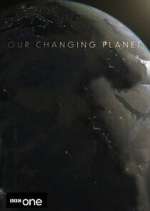
The second year of the BBC's ambitious, seven-year, natural history project sees six presenters visit six of the planet's most threatened ecosystems to meet the people fighting to restore the earth's delicate balance and adapt to the changes that have already taken place.In this first episode, we travel to three locations with presenters Steve Backshall, Liz Bonnin and Chris Packham.Steve Backshall visits the Maldives, a country facing significant challenges because of climate change. Warming seas and the acidification of the oceans have led to coral bleaching on a massive scale. And increasingly unpredictable weather patterns could deal the final blow. 2022 saw the first mass coral bleaching during La Niña, a climate pattern that historically keeps oceans cool enough to avoid bleaching. The earth's reefs are now at a tipping point. But these extreme challenges are galvanising the science community to get out of their labs and into the field, experimenting with more novel and innovative techniques, trialling ideas that could just make a difference.Steve returns to Laamu Atoll to find out about one such cutting-edge project. Professor Steve Simpson and his team from Bristol University have identified that coral larvae, baby corals no bigger than a pinhead, move towards the sound of a healthy reef, a response that guides them to settle amongst a more biodiverse and healthier habitat, and in so doing, add to the coral population. Steve dives with Professor Simpson and records the sound of a healthy reef. With the help of a 360-degree camera, they are able to identify key marine life that make up these coral playlists.Liz Bonnin returns to California to investigate some surprising solutions for the relentless onslaught of the state's wildfire season. California's wildfires are becoming a yearly catastrophe, with the state government spending billions of dollars in the last five years to fight these out-of-control blazes. Liz discovers that ancient forest management techniques and the beaver, a misunderstood mammal, could help prevent them in the first place, providing powerful tools to sustainably protect our planet against the ravages of climate change.Liz visits the traditional reservation of the indigenous Tule River tribe, who have been practising a technique called ‘controlled burning' for thousands of years. By regularly burning the twigs and leaf litter that collect on the forest floor, they reduce the amount of material that typically collects in forests and fuels megablazes. Liz joins the tribe on one of their cultural burns and finds out how they have protected their land and, importantly, their sacred sequoia trees.To prevent the fires from moving at speed across the landscape, scientists and indigenous communities are hoping that beavers can help solve the problem. Once found across North America, by 1900 beavers had been hunted virtually to extinction. Liz joins scientist Dr Emily Fairfax, who has been studying the benefits of introducing beavers into a landscape. Surrounded by burnt-out forest, a green oasis sits at it centre, the territory of a beaver family that has created what Emily describes as a ‘speed bump' for wildfires.Chris Packham is in Greenland to learn more about the effects of global warming and the rate at which snow and ice are melting and retreating in the Arctic. He travels to a science research station on the island's remote north east coast, one of the most important locations in the world for the understanding of warming in the Arctic and its global impact. Chris joins an Arctic expedition as scientists from Aarhus University and Copenhagen Zoo track across the snow-covered tundra in search of musk oxen, an ice age survivor that can tolerate temperatures ranging from - 40 to +10 degrees Celsius.With the gradual warming of the Arctic, future conditions may not resemble anything the species has ever encountered. Now moving slowly northwards as temperatures rise, there are many questions to be answered: will populations become vulnerable to warm weather disease? How long will they have a territory that's cold enough for them to survive in? And what will they leave behind them? The conditions are gruelling. Chris and the team have to move fast across the vast landscape, hoping to dart and collar 21 of these huge, powerful creatures, taking hair, blood and stomach samples. We learn how the sophisticated collars and an array of science techniques will be able to tell us if they breed, feed, survive or perish in the years to come.
Starring:
Chris Packham, Steve Backshall, Liz Bonnin, Gordon Buchanan, Ade Adepitan, Ella Al-Shamahi
Genre:
Nature
How to Watch Our Changing Planet Season 02 Episode 01 Legally and Safely Online
Want to enjoy Our Changing Planet Season 02 Episode 01 without breaking any rules? There are plenty of legal and secure ways to stream the iconic superhero film. Depending on your location, platforms like Netflix, Amazon Prime Video, Apple TV+, HBO Max, or Disney+ may have it available as part of their subscription catalog.
If you're looking for free options, check out ad-supported streaming services such as Tubi, Pluto TV, Crackle, or Peacock, which often feature classic titles at no cost.
Prefer to own or rent the film? You can find Our Changing Planet Season 02 Episode 01 in HD or 4K on digital marketplaces like Google Play, iTunes, and Amazon Video. Additionally, services like Kanopy and Hoopla offer free streaming if you have a participating library card or university login.
Similar


















Experience the Thrill of Our Changing Planet Season 02 Episode 01 – Stream Free on M4freetv
Dive into the of Our Changing Planet Season 02 Episode 01—a legendary blend of Nature—available to stream for free on M4freetv, your trusted source for high-quality, no-hassle entertainment. Watch this in crisp HD, complete with English subtitles for an immersive viewing experience.
Forget sign-ups, subscriptions, or disruptive ads. Whether you prefer to watch online instantly or download for later, M4freetv gives you total control with a smooth, user-friendly platform designed for seamless streaming.
With just a few clicks, you can bring Our Changing Planet Season 02 Episode 01 to your screen and make it the centerpiece of your movie night. Join millions who are already enjoying fast, secure, and 100% free access to top-tier entertainment—only on M4freetv.